24/7 emergency service available995 Forest St, Reno, NV 89509
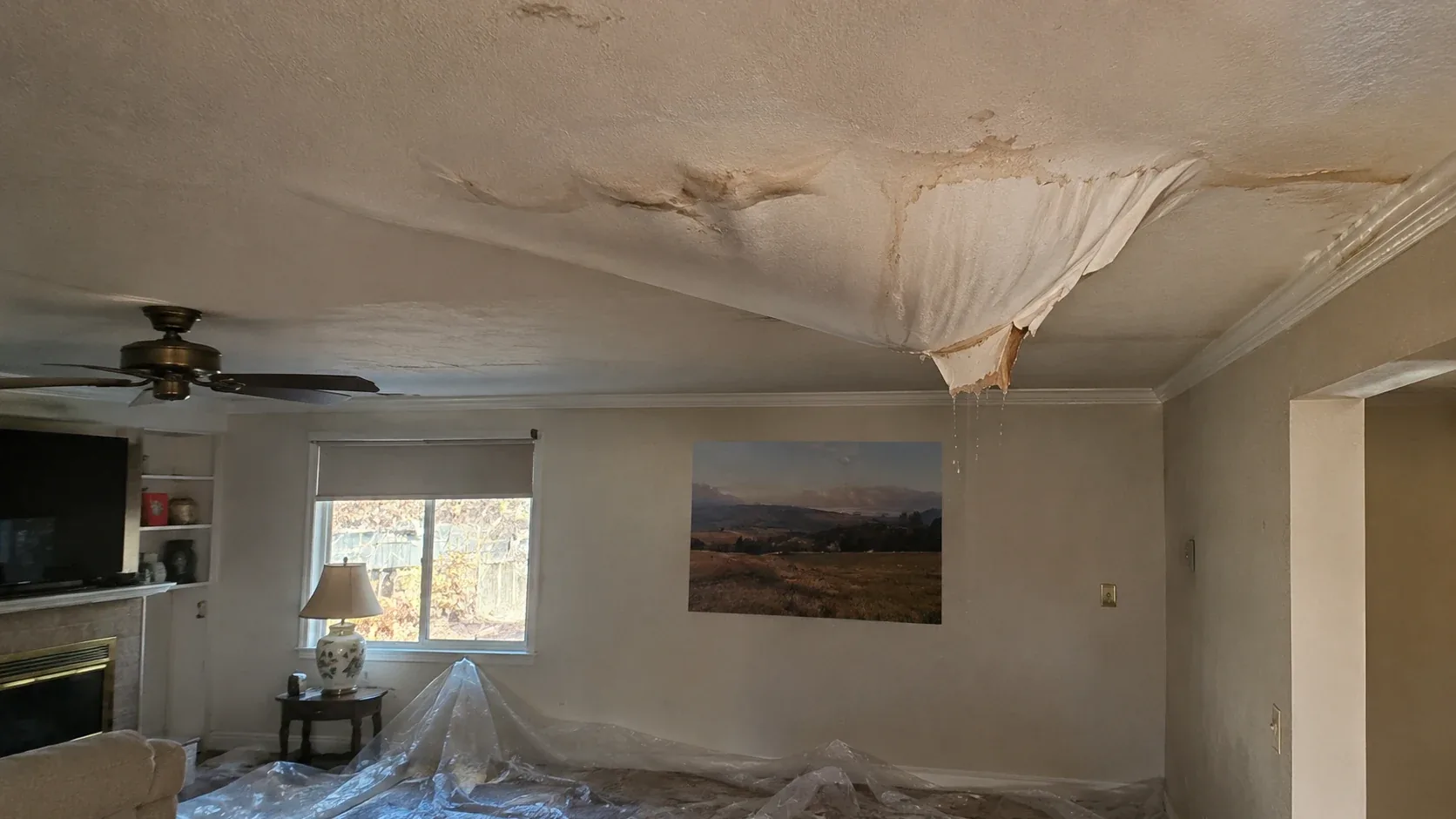
Sagging water-damaged drywall across a living room ceiling near a light fixture

RENO, NEVADA · STORM & WINTER DAMAGE

Ceiling Water Damage
in Reno, NV

A ceiling stain, soft patch or sagging area can conceal water above the room. Reno StormGuard assesses the source and the affected ceiling assembly, with attention to overhead material, wet electrical fixtures and moisture that may continue into nearby walls.

  • Overhead condition assessed
  • Water source traced above the room
  • Ceiling cavities checked for drying
Call about ceiling water damage{{PHONE_DISPLAY}}

24/7 emergency service available

WHAT THE SERVICE COVERS

Assessing the Ceiling and the Water Above It

The ceiling is where damage becomes visible, but its water source may sit in a bathroom, supply line, attic or roof assembly above. A stain is therefore a starting point rather than a diagnosis. We assess the accessible route and the condition of the ceiling material before discussing removal, drying or repair of the finish.

Drywall can soften, separate or sag when it takes on water. Other ceiling finishes may show cracking, staining or loose material instead. The overhead condition affects access to the room and the way the assembly can be checked. A ceiling that has lost its integrity cannot be made sound merely by drying the air beneath it.

Wet insulation or framing can remain above a finish after dripping stops. We consider those concealed materials along with the room-side mark and any adjoining wall route. The proposed work explains why an opening or material removal is needed, while the source of water is addressed separately. Replacing the visible ceiling before the cavity is dry can conceal the remaining problem.

Ceiling Stains and Sagging in Reno Homes

In Midtown and Old Southwest Reno, older ceilings may sit beneath plumbing alterations or roof details that are not visible from the room. A newer two-story home may instead have a laundry or bathroom directly above the affected area. Neither layout proves the source by itself. The wet pattern and the history of activity or weather help determine where to investigate.

Reno roof leaks and ice-dam meltwater can produce ceiling-edge staining, while a pipe or appliance release upstairs may appear nearer the center of a room. Water can also move along framing and appear at a seam away from its origin. Describe what happened before the mark developed, including fixture use, a freeze or recent roof wetting.

Sagging, bulging, falling fragments or a wet light fitting require care regardless of the size of the stain. Do not press on the surface to judge it or cut a hole to release water. The room beneath the affected area should remain clear until its condition can be assessed. Water held above a finish is not visible in full from below.

Water Above Drywall Can Create an Unsafe Area Below

Schematic illustration
Water Above Drywall Can Create an Unsafe Area BelowThe cutaway shows water held above a weakened ceiling and a light fixture near the affected area. Keep the space below clear rather than pressing, drilling or cutting into the sag.Water source above the roomWater held above drywallSagging finishFixtureKeep the area below clear
The cutaway shows water held above a weakened ceiling and a light fixture near the affected area. Keep the space below clear rather than pressing, drilling or cutting into the sag.
Scroll across the schematic on smaller screens

HOW THE WORK IS CARRIED OUT

Our Ceiling Water Damage Process in Reno, NV

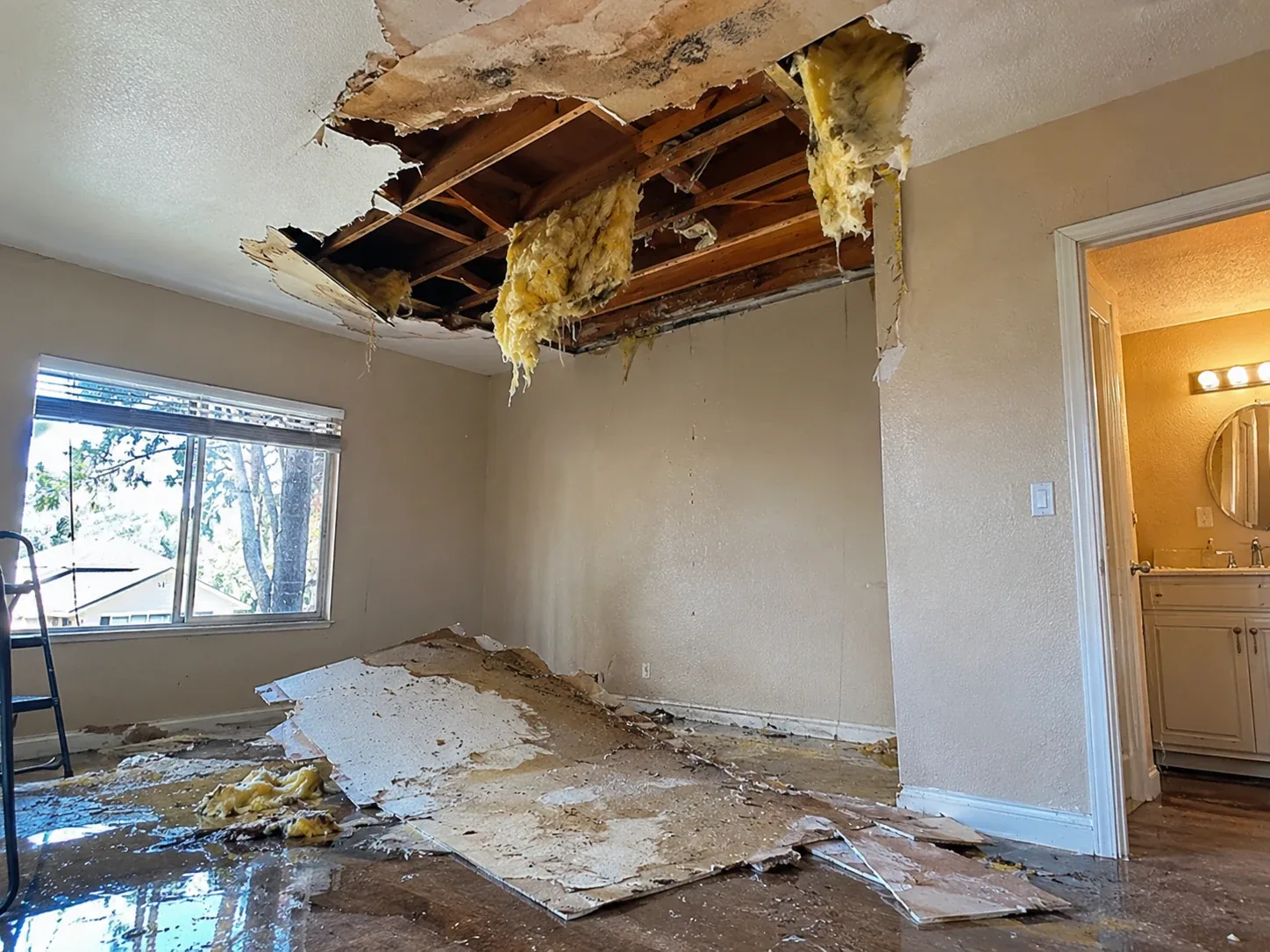
Collapsed ceiling board exposing wet framing and insulation above the room

Establish safe access and investigate above the finish

We assess the overhead condition and the likely routes from plumbing, the upper floor or the attic. Wet electrical equipment and unstable material affect how the room can be approached. Accessible moisture findings are connected with the history you provide. An inspection then considers the assembly above the mark rather than assuming that the nearest fixture or roof point caused the loss.

Address unstable or unsuitable ceiling material

Softened, detached or otherwise unsuitable finishes are evaluated for controlled removal as part of the work plan. That can also expose wet insulation and framing for assessment. We explain the reason for access and the affected boundary before work proceeds. Simply opening a small drain hole from below would not resolve the condition of the surrounding material or the concealed source.

Dry the cavity before the finish is restored

Retained framing and adjoining materials are dried using a setup that accounts for the cavity, not just the occupied room. Readings document how those areas change at each visit and are compared with appropriate dry material. The source must no longer be rewetting the assembly. Checks before closure help avoid placing new ceiling board over framing or insulation that still holds moisture.

What to Do Before We Arrive

A ceiling loss needs an overhead safety check before furniture protection or cosmetic cleanup. Keep distance from the damaged area, especially where material is visibly changing shape.

  • Keep people out from beneath sagging or bulging material. Do not stand below it to move a bucket, photograph a close-up or protect furniture.
  • Do not touch wet lights, switches or ceiling fans. Do not operate a fixture to see whether it still works after the ceiling becomes wet.
  • Leave the ceiling intact until its condition is assessed. Pressing, puncturing or pulling at softened material can release water or detached board overhead.
  • Stop an upstairs supply only when the valve and route are safe. Do not enter standing water above the room to reach a shutoff.
  • Describe changes in the stain or sag from outside the affected area. Mention the room above and recent plumbing use or weather without opening the cavity.

Questions About Ceiling Water Damage in Reno

Call {{PHONE_DISPLAY}}

Should I poke a hole in a sagging ceiling to drain it?

Do not puncture or press on a sagging ceiling yourself. The surface may be holding water or detached material that can release into the room, and wiring may be nearby. Keep the area underneath clear and explain the condition when calling. Controlled access needs to account for the whole weakened area rather than simply making a hole below the visible bulge.

Does a brown ceiling stain always come from the roof?

No. A plumbing line, an upstairs appliance or a bathroom assembly can also introduce water above the finish. Roof and ice-dam leaks are other possibilities. The room layout, moisture pattern and timing help guide the investigation. Tell us what was happening before the stain appeared, rather than assuming its color identifies the source or the extent of wetting.

Can the ceiling be repaired as soon as dripping stops?

Dripping can stop while insulation or framing remains wet above the finish. The condition of the ceiling board also needs assessment; drying does not restore material that has detached or deteriorated. Repair should therefore follow control of the source and checks of the cavity. A quiet, dry-looking room below is not enough evidence to close the assembly.

Why inspect the upper wall beside a ceiling leak?

Water can reach the ceiling-to-wall junction and continue inside the partition. A ceiling patch alone may leave that connected material wet. We assess adjoining areas when the construction and readings indicate a route into them. The decision follows findings at the home rather than assuming that every wall in a room needs the same treatment because the ceiling has a stain.

24/7 emergency service available

Call About Ceiling Water Damage in Reno, NV

Call about a wet or sagging ceiling from a safe part of the home, and describe the overhead condition and any room or attic above it.

Call Reno StormGuard{{PHONE_DISPLAY}}
Call {{PHONE_DISPLAY}}